
By Ruth Furman, Collections Committee, RJD
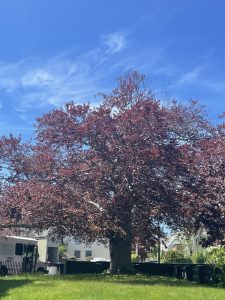 Standing in the landmark gardens of the RJD’s north west corner is a distinctive living link to the property’s past, a purple beech that’s nearing a century and a half in age. It’s striking dark purple foliage along with a massive, moss-covered trunk supporting wide spreading branches makes for an imposing presence along County Street. Much more than an attractive specimen, it’s part of the Museum’s historic landscape. The beech has witnessed changing seasons and provided generations with shade and beauty. A tree that has survived for over a century represents an investment that cannot be replaced as its maturity, character and relationship to the surrounding historic landscape make its preservation particularly important.
This venerable specimen now faces a serious threat from a microscopic nematode which feeds inside the beech leaves. Beech Leaf Disease (BLD) was identified in 2012 spreading east from Ohio, affecting both our native American beech as well as European beeches like the RJD’s. Noticeable symptoms of the disease are puckering or distorted leaves, reduced foliage, a thinning canopy and eventually branch dieback. The declining vigor places considerable stress on mature trees interfering with its ability to photosynthesize and produce the necessary resources for growth and defense. Having lived for well over a century, it is particularly important for the Museum to maintain the tree’s health and resilience.
Bartlett Tree a nationally known company which has been analyzing BLD and developing strategies for managing affected trees was called in to verify the disease and provide professional care. Treating BLD does not guarantee the tree will recover but rather the objective is to reduce the disease’s impact and maintain the tree’s vigor giving this valuable specimen the best opportunity to survive. Accompanying Bartlett’s treatments, Rick Finneran, Lead Gardener, carefully monitors the tree’s canopy and overall condition calling in a professional tree service company to remove dead and or dying branches. Attention is also given to soil health and root-zone conditions in an effort to minimize stresses on the tree. Quarterly seasonal photographs of the tree are being taken documenting its story. A historic specimen such as this requires a thoughtful, long-term approach.
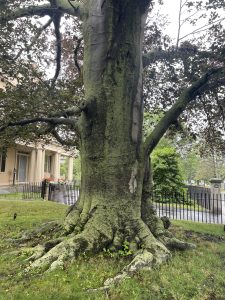
Preserving the RJD purple beech is about more than preserving a tree. It is about protecting a living piece of the RJD’s history. The tree continues to grow and change, connecting the past with the present in a very tangible way. It’s a commitment to stewardship supported by professional arboricultural care on which the tree’s survival depends. The current treatment and care give this iconic purple beech the chance to remain part of the landscape for some years. Caring for it today, honors Amelia Jones who planted the tree and tended the gardens during the 19th century followed by the Duff family who cared for the gardens in the early part of the 20th century. The current care organized by the Museum ensures that future generations will have the opportunity to stand beneath this majestic old beech and experience a remarkable living legacy.
————————————-
Save Our Tree and Save History! When Bartlett recommended a treatment for the RJD beech tree costing upwards of $2,100, we said, “YES!”, despite the cost amounting to about 75% of our annual budget for garden care. You can help. Please consider donating any amount to cover this recent cost of care.